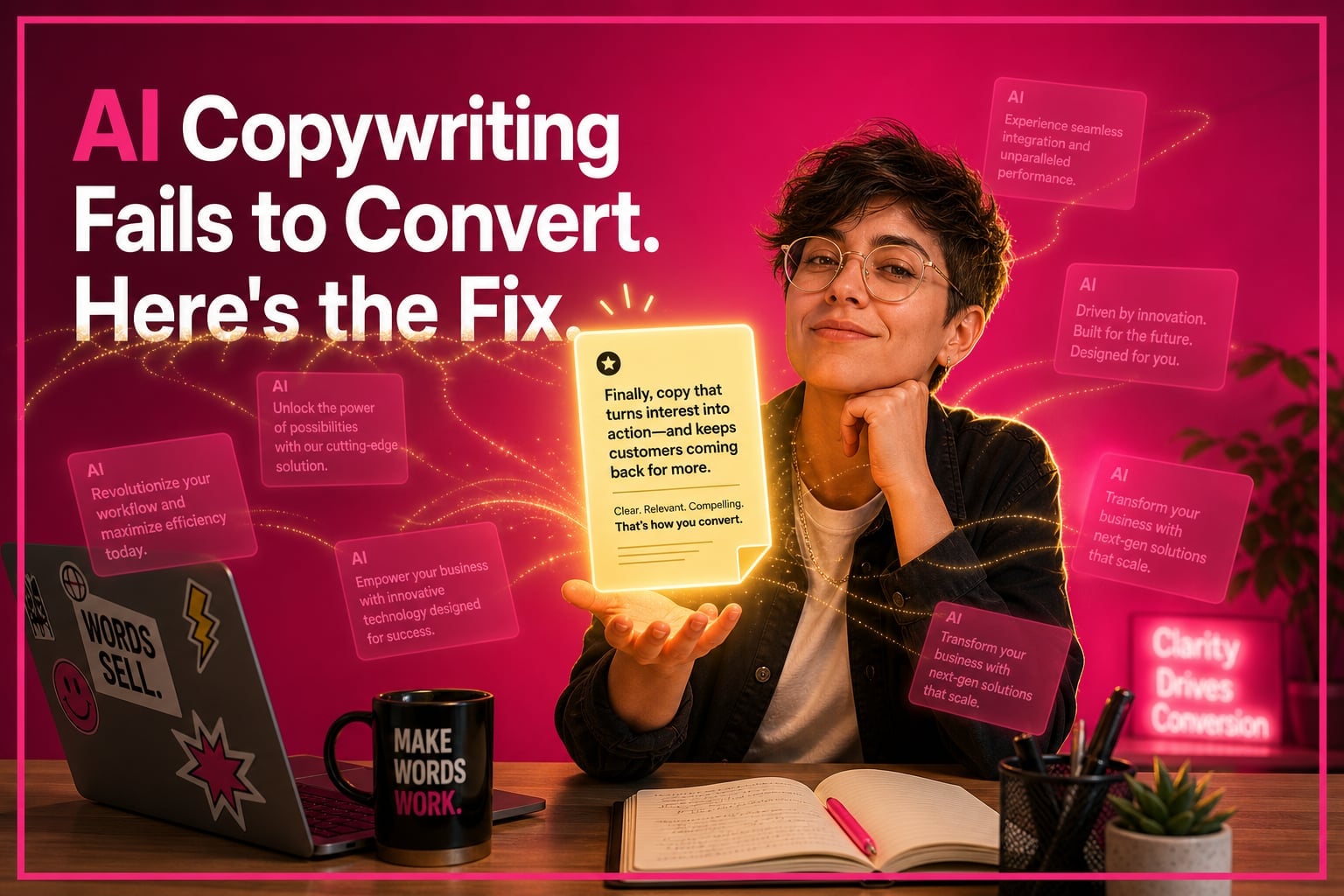
AI Copywriting Conversion: Why Most AI Copy Flops and How to Fix It
Most AI copy fails for one reason nobody talks about: the problem is not the tool, it is the input. Garbage context in, generic copy out. 45% of marketers say copy quality is the biggest factor in conversion rates, yet most teams hand AI a product name and a vague brief and wonder why the output reads like a brochure from 2009. The fix is not a better AI. It is a smarter human running the process.
What Makes AI Copywriting Conversion So Tricky?
AI copywriting conversion is the process of using AI-generated text to move a reader toward a specific action, whether that is a click, a purchase, or a sign-up. Sounds simple. It is not.
The core problem is that AI is a pattern machine. It averages every piece of marketing copy it has ever seen into something statistically safe and completely forgettable. As the Founder's Copy Engine puts it: AI makes you sound like everyone. That is why your output feels generic. Because it is.
Meanwhile, 80% of buying decisions happen emotionally first, logically second. AI cannot manufacture emotion it has never felt. That gap is where conversions die.
The Biggest Pitfalls of Generic AI Copy (and Why They Matter)
Generic AI copy is text produced without audience-specific context, real brand voice, or emotional grounding, resulting in polished sentences that say nothing useful.
Here is what kills conversion most often:
- No voice-of-customer language. AI uses its own vocabulary. Your buyer uses theirs. Those two rarely match.
- Feature lists instead of pain resolution. AI defaults to describing what a product does, not what problem it solves.
- Zero specificity. Phrases like "streamline your workflow" could apply to 10,000 products. Specificity is what makes copy believable.
94% of users abandon sites with poor copy clarity. Vague AI copy is not just boring. It is actively costing you traffic.
Coolest.Agency's approach to this problem starts before a single word is drafted: the AI is trained on your actual brand voice and audience data, so it is not averaging the internet. It is writing from your specific context.
How to Train AI for High-Conversion AI Copywriting
Training AI for high-conversion copy means feeding it real customer language, your brand's tone, and conversion frameworks before asking it to write anything.
A Singapore-based crowdfunding charity used this method to build its first ad campaign. By using AI to develop messaging angles tied to real audience interviews, they tested multiple ad variations rapidly. The result: ROAS climbed from $1 to $7 in under three months, according to Social Media Examiner's strategic AI copywriting framework.