The Brand Voice Blueprint That Gets Your Content Noticed by AI Search
Here's the uncomfortable math: most brand content never makes it into an AI answer at all. Brand voice AI search visibility isn't won with a better adjective list. It's won with logic constraints AI can actually execute. Average brand mention rate across categories sits at just 17.2%, per NetRanks' AI Share-of-Voice report.
Key Takeaways
- 17.2% is the average brand mention rate in AI answers, per NetRanks. Leading brands clear that bar with structure, not style.
- Adjectives don't compile. Logic gates do. That's the whole shift this article makes.
- Original data and bold opinions earn citations that generic filler never will.
Why Your Content Isn't Showing Up in AI Search Results
AI search engines skip content that lacks structured authority signals, no matter how polished your style guide sounds. That's the blunt truth behind a huge chunk of "why don't we show up anymore" panic in marketing meetings.
Search Generative Experience now shapes close to 40% of search queries, and its bar for citation is precision, not prose, per Adobe's brand visibility research. Most B2B brands still appear in under 30% of relevant queries regardless of how much SEO work they've done, according to LLM Pulse's Share of Voice glossary.
Your style guide was built for humans skimming a page. AI doesn't skim. It parses. If your brand traits live as loose adjectives like "friendly" or "bold," there's nothing for a model to grab onto. Content Search Engine Land calls this stage the shift from "did I rank?" to "did I get named?" That's not an SEO tweak. It's a structural rebuild, and it starts with how you encode your voice, not just how you describe it.
How to Turn Your Brand Voice Into Rules AI Can Actually Follow
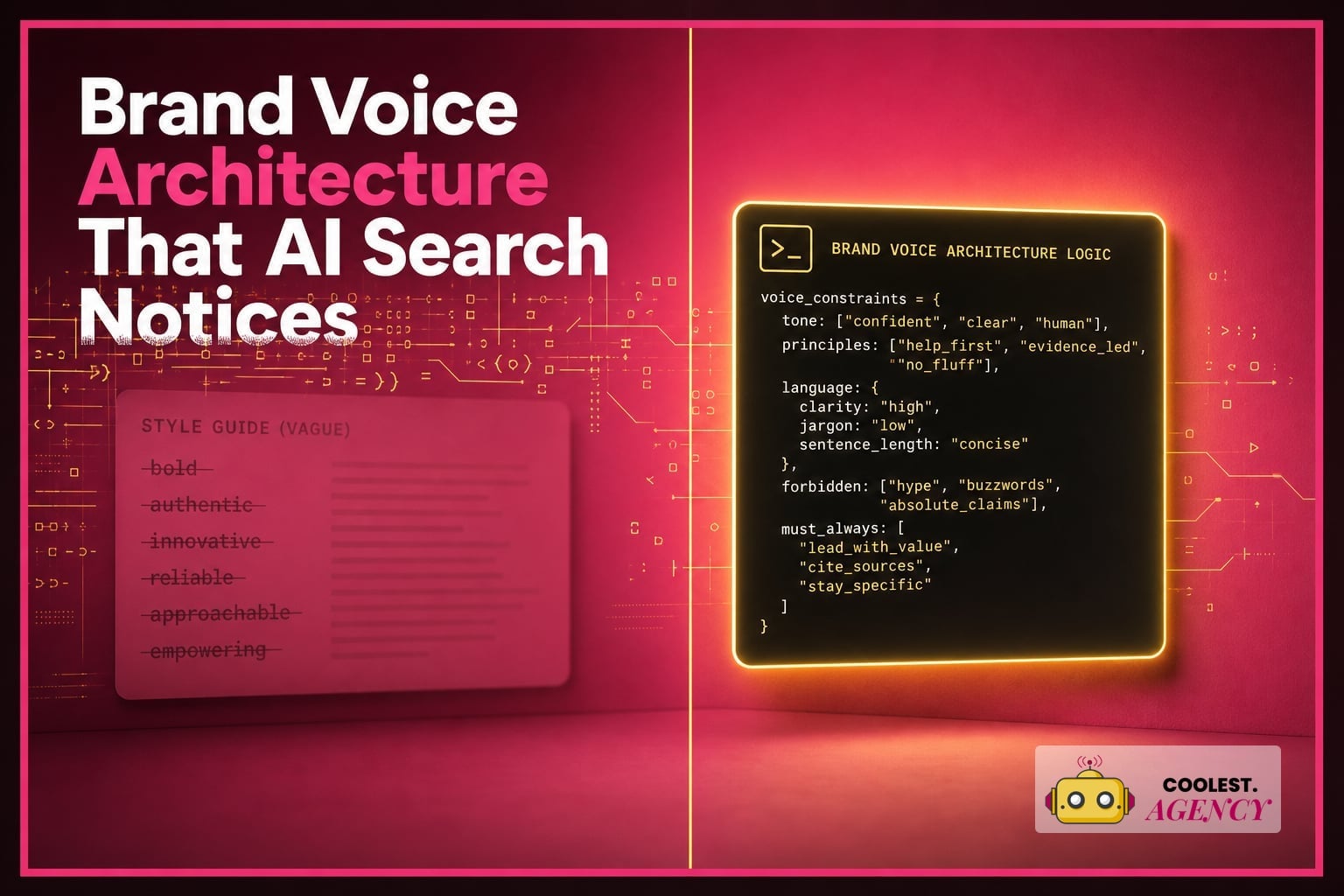
Turning brand voice into AI-readable logic means replacing adjectives with constraints: emotional thresholds, banned topics, and tone gates a model can execute line by line. "Friendly" is a vibe. "Never use exclamation points in pricing copy" is an instruction.
Here's the contrast that matters. A style guide says "confident." A logic constraint says: flag any sentence hedging with "maybe" or "could," cap sentence length at 20 words, block competitor comparisons outright. One is a mood board. The other is code a model can run.
| Style Guide Adjectives | AI-Readable Logic Constraints |
|---|---|
| "Playful, warm tone" | Max 1 joke per 300 words; no sarcasm on pricing pages |
| "Confident voice" | Ban hedge words: maybe, might, could; active voice only |
| "Approachable" | Reading level capped at grade 6; no jargon without a plain-English follow-up |
This is what Glean's guide to AI voice documentation calls behavioral constraints an algorithm can act on, instead of vague traits it has to guess at. Semji's brand voice research frames this same gap as the difference between describing a personality and operating one. Coolest.Agency builds this exact logic into its workflow: it learns your brand's actual constraints, not just its adjectives, and stays aligned to them automatically while it plans and publishes your social content. You set direction once, over coffee, and the system holds the line.