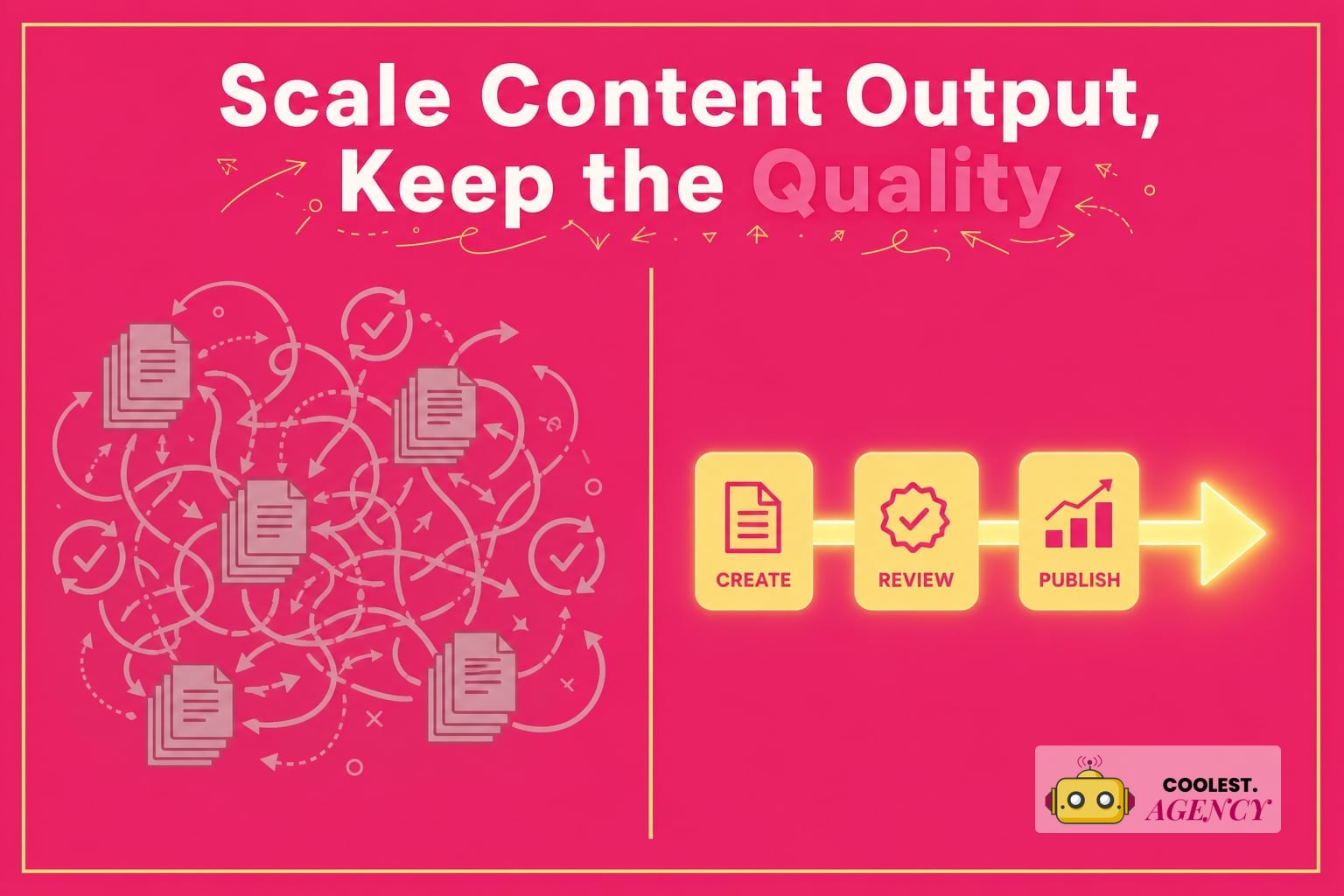
Scale Your Agency's Content Output Without Torching the Quality That Keeps Clients Paying
Here's the uncomfortable math nobody tells you when you're trying to scale content production agency operations past 3 to 5 clients: you can't do it by working harder, and you definitely can't do it by hiring your way out. The average agency already sinks 20 to 40% of its content budget into post-production cleanup, according to beCreatives' 2026 Editing Agency Guide. That's not a time problem. That's a structural leak.
Key Takeaways
- Your bottleneck is bleeding revenue, not minutes: a single stalled approval can block 3 to 5 other client projects at once, quietly eroding retainers.
- Fixing it takes three ordered moves, not a to-do list: audit where work actually stalls, systemize that exact stage, then let AI multiply throughput.
- Teams running at 100% capacity have zero resilience, per Sight AI's 2026 analysis; 80 to 85% capacity is the sweet spot that absorbs chaos.
- Quality isn't a heroic effort, it's a system output: a three-point editorial gate catches AI-speak before it ever reaches a client's inbox.
Why Content Bottlenecks Are Actually a Revenue Leak in Disguise
A content bottleneck is any stage in your production line where work piles up and stalls, and every hour it sits there is an hour that produces nothing billable. You're not managing a schedule. You're managing a dam that's about to burst on 4 other client accounts at once.
Many agencies discover they're sinking 60% of production time into a phase that should eat maybe 20%, according to Sight AI. Usually that phase is research or approval, not writing.
That single stuck stage doesn't just delay one deliverable. It blocks the 3 to 5 other projects queued behind it, and clients who are already side-eyeing your invoice notice the lag fast.
Solo operators feel this hardest. The fix isn't grinding longer nights, it's redesigning the handoff itself, which is exactly what a tripled engagement without losing brand voice case study lays out in painful, useful detail. Prompting harder was never the fix, as the paintbrush problem makes clear: you need a painter, not just more paint.
The Three Moves That Fix It: Audit, Systemize, Amplify
The three-layer fix for content bottlenecks means mapping where work stalls, building repeatable systems around that exact stage, then layering AI to multiply output. Skip a step, and you've just built a faster path to the same wall.
Contrast this with the "just hire a writer" instinct. Hiring adds headcount cost without fixing the broken handoff, so the new hire inherits the same jam six weeks later.
- Audit: Time each stage for one week. Standardize the data so you can see, in numbers, exactly where drafts sit idle.
- Systemize: Build a repeatable protocol around that one stage, borrowing the sequencing from a AI content cycle that actually converts: audit, draft, edit, optimize, in that order, every time.
- Amplify: Only now bring in AI, so it multiplies a clean system instead of accelerating a chaotic one.