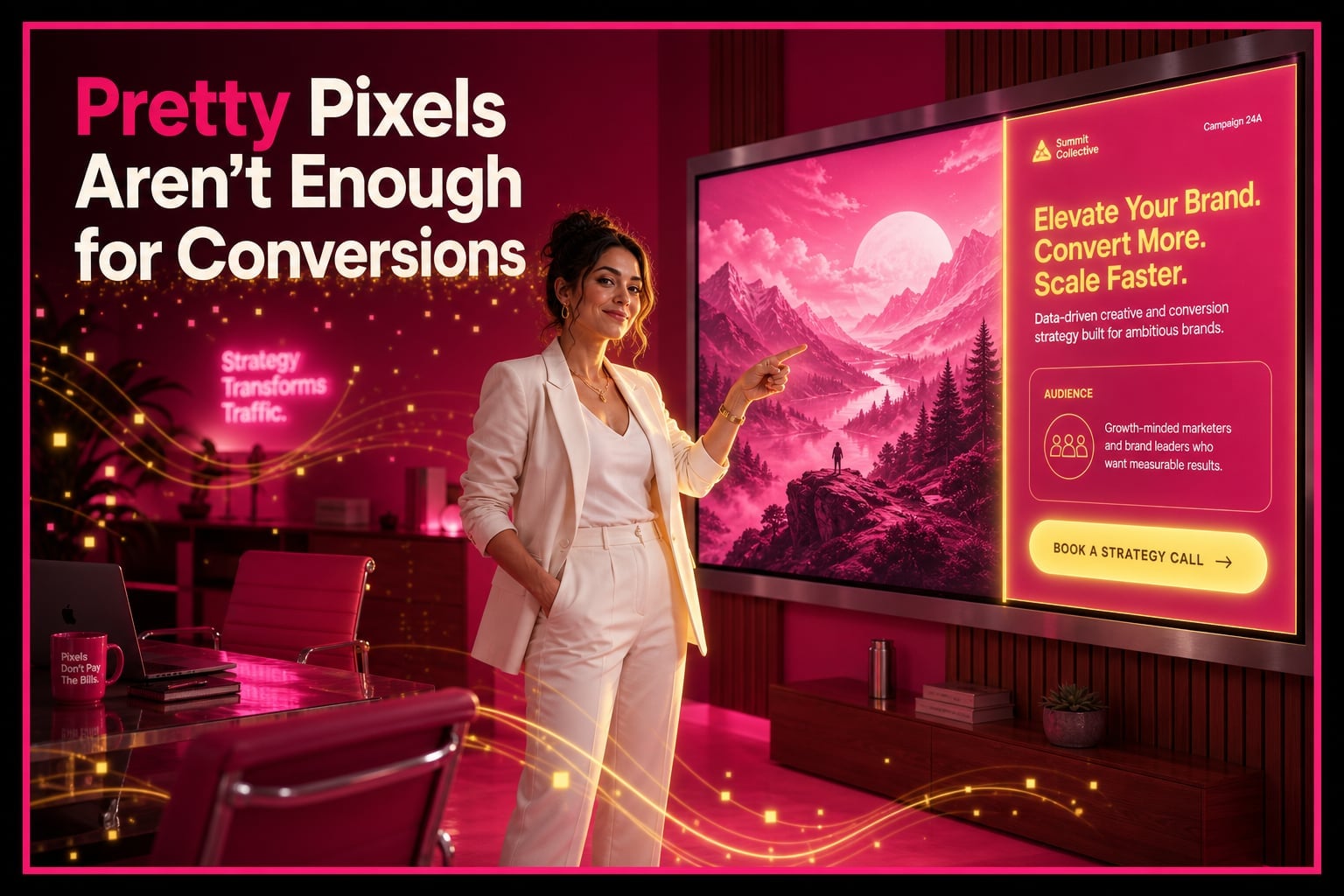
Midjourney vs Coolest.Agency: Why Pretty Pixels Aren't Enough for High-Conversion Campaigns
Key Takeaways: What Sets These Two Apart
The core difference between Midjourney and a strategic AI platform is this: one gives you a stunning image, the other tells you what that image should make your audience feel, do, and buy. That gap is where campaigns are won or lost.
Most comparisons of AI tools focus on output quality. This one focuses on output purpose. Pretty pixels are table stakes in 2026. What actually moves revenue is narrative architecture built around your brand's voice and your audience's psychology.
- Midjourney excels at cinematic visuals and mood-driven imagery
- Strategic AI platforms connect those visuals to conversion logic
- The real question is not which tool looks better. It is which one sells.
What Does Midjourney Actually Do Well in the Midjourney vs Coolest.Agency Debate?
Midjourney is an AI image generation tool that produces high-quality, stylized visuals from text prompts, optimized for creative impact and aesthetic depth.
It is genuinely excellent at what it does. Midjourney holds a 26.8% global market share in AI image generation, ahead of DALL-E and Stable Diffusion. That lead exists for a reason: the outputs are cinematic, distinctive, and mood-rich in ways competitors still struggle to match.
But here is the catch. Midjourney does not know your brand. It does not know your customer's objections. It cannot connect a visual to a conversion goal. Midjourney is best for strong visual impact and advertising-style images, but production-ready, commercially safe, brand-consistent workflows require more than a prompt.
You are probably using Midjourney to generate assets and then manually reverse-engineering a strategy around them. That is backwards, and it costs you time you do not have.
Why Pretty Isn't Enough: The Real Cost of Generic AI in 2026
Generic AI content is marketing material that looks polished but carries no strategic intent, no brand specificity, and no conversion architecture.
The market has caught up. Over 80% of marketers worldwide now use AI tools in their campaigns. When everyone has access to the same image generator, the visual advantage disappears. What remains is strategy.
Clients can spot AI-speak and AI-aesthetic from three seconds of scrolling. The brands winning in 2026 are not the ones with prettier images. They are the ones whose AI-generated content feels like it was written and designed by someone who actually understands the audience.
The cost of generic is not just aesthetic. It is attention, trust, and conversion rate. A campaign that looks good but says nothing specific converts at the same rate as no campaign at all.
How Coolest.Agency Turns AI From Paintbrush to Strategy
A strategic AI platform for campaigns is one that combines visual generation with narrative logic, brand alignment, and conversion-focused content architecture in a single workflow.