Freelancer SEO Strategies: Master Internal Linking for Faster Rankings
Most articles on freelancer SEO strategies tell you to chase backlinks and fix your title tags. They skip the one tactic that costs nothing, takes an afternoon, and compounds quietly in the background: internal linking. Done right, it tells Google which pages matter, speeds up indexing, and passes authority to your money pages without a single cold email.
Key Takeaways
- Internal linking is the highest-leverage, lowest-cost SEO move available to solo operators.
- A hub-and-spoke structure (one pillar page, several supporting posts) is the fastest way to build topical authority alone.
- Descriptive anchor text beats generic "click here" every time.
- A 30-minute monthly link audit beats a one-time overhaul you never revisit.
- Free tools like Google Search Console and Screaming Frog (free tier) are enough to start today.
Why Is Internal Linking the Game-Changer in Freelancer SEO Strategies?
Internal linking is the practice of connecting pages within your own website so users and search engines can move between related content without leaving your domain. It sounds basic. That is exactly why most freelancers ignore it and why that is a mistake.
Here is the uncomfortable truth: over 90% of pages get zero traffic from Google because they failed at basic targeting and structure. Internal links are a structural fix you control entirely. No outreach. No budget. Just deliberate connections between pages you already own.
When Google crawls your site, it follows links. A page with no internal links pointing to it is essentially invisible. Internal linking helps Google understand how your site is structured and which pages are most important, increasing crawl frequency on your key pages.
For a solo freelancer, this matters more than it does for a 20-person agency. You cannot publish 50 posts a month. So every post you do publish needs to work harder. Internal links are how you make that happen.
You are probably adding a link or two at the bottom of a post and calling it done. That is not a strategy. That is decoration. The freelancers pulling ahead are building deliberate link structures before they hit publish, not after.
Internal links are one of the most underutilized signals in SEO. They tell search engines not just where to go, but what matters. A well-linked site can outperform a site with twice the backlinks if the internal architecture is cleaner.
Cyrus Shepard, Founder of Zyppy SEO, speaking at MozCon 2022
How Can Solo Freelancers Build Powerful Internal Link Structures Using Freelancer SEO Strategies?
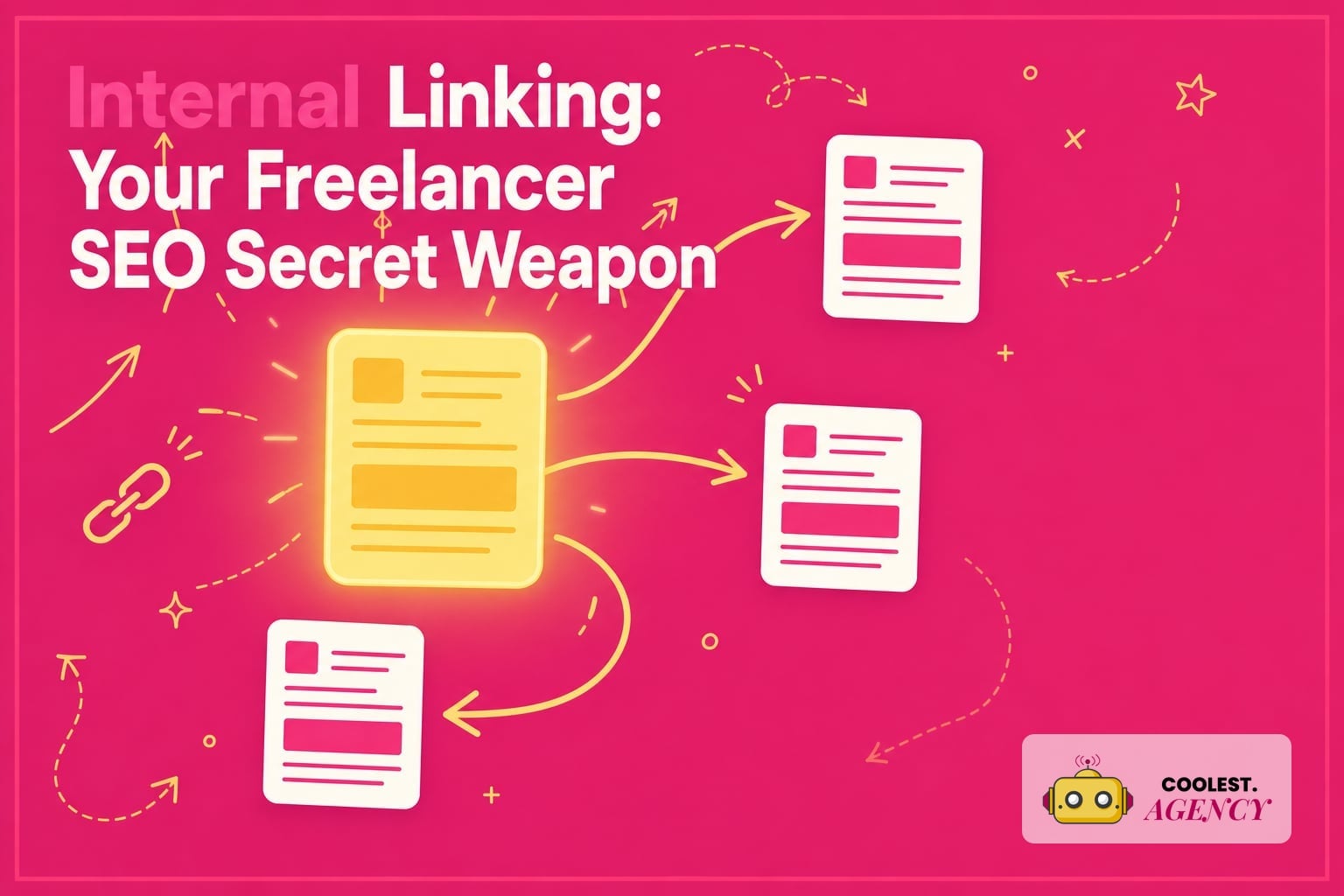
A hub-and-spoke internal link structure is a model where one authoritative pillar page links to several supporting posts, and each supporting post links back to the pillar. This creates a tight content cluster that signals topical authority to Google.
Here is the three-step version you can run solo:
- Pick your pillar page. This is your highest-value service or topic page. For a freelance SEO specialist, that might be "Technical SEO Audit Services" or "Local SEO for Small Businesses."
- Write 3 to 5 supporting posts. Each one covers a subtopic. Each one links back to the pillar with descriptive anchor text, not "click here."
- Link the pillar to each spoke. The pillar page links out to every supporting post. Google now sees a cluster, not a pile of disconnected pages.