Human Slop Came First: AI Just Joined a Very Old Tradition of Bad Content
AI content slop is real, but it is the newest chapter in a very old book. Humans shipped forgettable content at industrial scale for twenty years. If a client has ever asked whether your draft "sounds like AI," the real question was always whether it sounds like anyone.
Key Takeaways
- 86.5% of 600,000 top-ranking pages already contain some AI content, so the bar is judgment, not origin.
- Three questions sort any draft: specific, lived, useful. Nobody has to ask who typed it.
- 42% of creators using AI skip editing. That skipped edit, not the model, is where your reputation leaks.
- Let AI draft. You keep intent, facts, and voice.
Was Human Slop Here Long Before AI?
Yes. Humans produced content-farm articles, keyword-stuffed pages, and recycled listicles for decades before generative AI, so low-value content predates the technology by a wide margin.
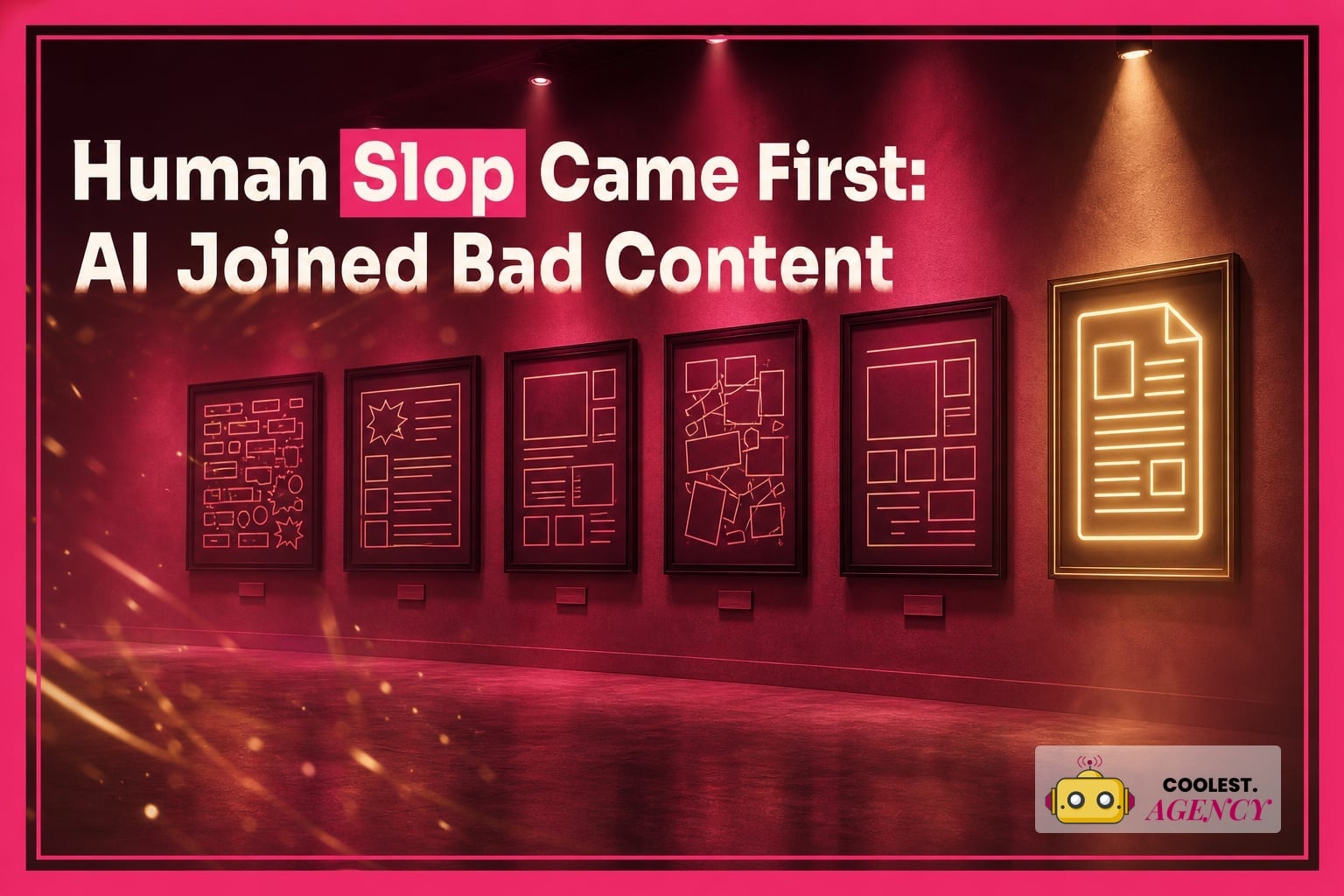
Picture a bad-content hall of fame. Wing one: the keyword-stuffed page that says "cheap running shoes" nine times and means none of them. Wing two: the content farm paying pennies per article on topics nobody cared about. Wing three: the "17 Tips" listicle, rewritten from the same five other listicles.
Now watch a new exhibit walk in: a generic AI draft. It does not look like an alien. It looks like a cousin.
One writer put it bluntly: AI slop is just compressed human slop, because the models learned from a web that was already generic and derivative. The machine inherited our habits.
Origin also fails as a detector. Surfer's analysis found that more than 20% of human-created articles were flagged as AI by Originality.ai. Your best human work can get accused too.
So stop asking who made it. That question is a coin flip with a lawyer attached.
What Actually Separates Slop From Signal in Any Draft?
Three questions sort any draft: does it say something specific, does it reflect real experience, and does it serve a clear reader need. Authorship by human or machine does not enter the test.
Think of a restaurant kitchen. The diner never asks who chopped the onions. They taste the plate. The pass, where the chef inspects every dish, is the only quality system that matters.
The Pass Test
- Specific: Could a competitor paste this under their logo unchanged? If yes, it fails.
- Lived: Does it hold a detail only someone who did the work would know? A number, a mistake, a client moment.
- Useful: Can you name the one reader and the one decision this helps?